Marketing automation for B2B companies that works

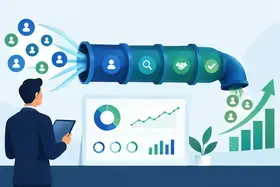
A salesperson should not have to chase information that already exists in the CRM. Yet that is exactly what happens in many companies: marketing sends leads, sales starts from zero and important buying signals disappear between forms, emails and meeting bookings. Marketing automation for B2B companies does not solve that problem by sending more emails. It solves it by creating a shared process for how data becomes action.
For companies with longer sales cycles, several decision makers and complex offerings, automation is a revenue question. Set up right, it can help the team prioritise the right accounts, follow up at the right moment and give sales a clear picture of what has actually happened before the first call. Set up wrong, it becomes an expensive email machine that produces activity without affecting pipeline.
Start in the business, not in the tool
The most common mistake is to start with the features of a marketing automation system. The team discusses workflows, email templates and scoring models before agreeing on what characterises a good deal.
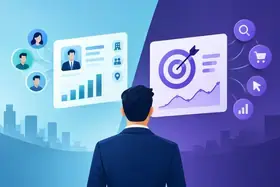
That order needs to be reversed. Start from the real questions that affect sales: Which segments have the highest potential? Which roles take part in the purchase? Which behaviours show actual buying maturity? When does a salesperson need to act, and when is it better to keep nurturing the contact?
The answer differs between companies. A SaaS company selling a defined tool can get value from product usage and demo activity as strong signals. A company selling complex services to enterprise often needs to weigh in account level, geographic expansion, several stakeholders and concrete change initiatives at the customer. A person who downloads a report is rarely ready for a sales call. An account where three relevant roles keep coming back to material about a specific business problem might be.
Automation should therefore reflect your go-to-market model. Not a standard template from the system vendor.
When marketing automation for B2B companies delivers
Automation does the most good where processes otherwise fall short on pace, relevance or handover. It is often about capturing existing interest, refining it with the right content and giving sales a clear next step.
Think of a contact who signs up for a webinar on how companies can make their international sales organisation more efficient. A generic thank-you email does not go far. A better flow uses the information you already have: the contact's role, company size, market, earlier interactions and whether other people from the same account are active. Communication can then be adapted to the question the contact is trying to solve, while sales gets a signal only when the combination of profile and behaviour justifies it.
That does not mean every contact should end up in a long nurturing sequence. In some situations quick manual follow-up is better. A quote request, a booked demo or repeated visits from a priority account rarely require more automation. There the system should reduce administration and give sales context, not delay the dialogue.
The central trade-off is simple: automate the repetitive, but keep human judgement where the business value is high and the signals are ambiguous.
CRM data decides whether the flows are accurate
A workflow cannot compensate for a CRM where lifecycle stages are used differently, company data is missing and ownership is unclear. When the foundation is weak, the result is often duplicate emails, incorrect reporting and leads that bounce between teams with no owner.
You do not need perfect data to start. But you do need shared definitions. Marketing, sales and RevOps need, for example, to agree on what is meant by a new contact, marketing qualified lead, sales qualified lead, active opportunity and disqualified deal. They also need to define what happens in each handover, who owns the next step and within what time.
The company object is especially important in B2B. Decisions are rarely made by a single contact. The CRM must be able to connect engagement from several people to the same account and tell the difference between a curious individual and an account with growing buying interest. Otherwise you overvalue individual clicks and miss the combined signal.
Good data discipline also means limiting what is collected. Fields nobody uses in segmentation, follow-up or analysis should not be a requirement in forms and processes. More data is not the same as better decisions. Relevant, up-to-date and consistent data is what makes automation useful.
Lead scoring should prioritise, not pretend to predict everything
Lead scoring often gets an aura of precision it rarely deserves. A contact reaching 100 points does not automatically mean a deal is close. The scoring model is a way to prioritise limited sales coverage, not a crystal ball.
A working model combines fit and engagement. Fit can be industry, revenue, market, technical environment or seniority. Engagement can be repeated visits to commercial pages, attendance at relevant events, interaction with specific content or activity from several people at the same account.
Weight the signals by real outcomes. If historical deals show that companies in a certain category convert better, that should affect prioritisation. If webinar attendance rarely leads to meetings, that signal should not dominate the model just because it is easy to measure.
Rather start with a simple model that salespeople understand and use. Then follow up on which scores actually correlate with meetings, qualified opportunities and won deals. A scoring model that is never adjusted quickly becomes an automated guess.
Build few flows with a clear business purpose
Many organisations have too many automations and too little control. Flows are built for a campaign, left behind afterwards and eventually start competing for the same contacts. The result is scattered communication and a system nobody dares to change.
Start with the flows where the effect can be followed all the way to pipeline. That could be handling of inbound demo or contact requests, follow-up of high-activity accounts, reactivation of opportunities that have stalled or onboarding that helps new customers reach value faster.
Every flow needs a clear purpose, a named owner and rules for when it should be paused or ended. Document which segments are included, which data is used, what is sent and which team takes over. It sounds basic, but it is the difference between a steerable revenue engine and a patchwork of automatic actions.
AI can strengthen the process by summarising account signals, suggesting next steps or helping the team identify data quality problems. But AI should not be used to mass-produce generic messages. When the recipient feels the communication lacks an understanding of their situation, it damages trust, however efficient the production has been.
Measure where the revenue process actually changes
Open rate and click rate can be useful diagnostic metrics, but they do not show whether the automation improves the business. The focus should be on conversion between funnel stages: from engaged account to sales follow-up, from follow-up to qualified opportunity and from opportunity to won deal.
Look at lead times too. How long does it take from a strong signal to contact from sales? How many qualified leads get feedback within the agreed time? How long do opportunities stay in different stages? This is often where the bottlenecks show that no more email sends can solve.
Marketing should not be judged on volume alone, and sales should not be able to dismiss all inbound leads as weak without feedback. A shared view of quality, response and pipeline creates accountability on both sides. That is where RevOps becomes concrete, not as a new organisational label but as working governance of the revenue process.
Make automation a way of working
The best results rarely come from a large implementation project that is then left untouched. Marketing, sales and CRM change all the time: new segments are prioritised, the offering develops and buying behaviours shift. Automation therefore needs a fixed rhythm of follow-up and improvement.
Review regularly which flows drive qualified opportunities, which create noise and where data is missing. Let salespeople give feedback on whether the signals help them in the dialogue. Let marketing see which objections and questions keep coming up in the sales process. Then automation becomes a shared asset instead of an isolated marketing project.
The most valuable automation is not the most advanced. It is the one that gets the right person the right context at the right moment and lets them make a better business decision. Start there, prove the effect and build further only when the foundation holds.
Frequently asked questions about marketing automation in B2B
Where should we start?
In the business, not in the tool. The most common mistake is to discuss workflows, email templates and scoring models before agreeing on what characterises a good deal. Instead start from which segments have the highest potential, which roles take part in the purchase, which behaviours show actual buying maturity and when a salesperson needs to act. Automation should reflect your go-to-market model, not a standard template from the system vendor.
When does automation deliver the most?
Where processes otherwise fall short on pace, relevance or handover. It is often about capturing existing interest, refining it with the right content and giving sales a clear next step with context about what happened before the first call.
Should everything be automated?
No. Automate the repetitive, but keep human judgement where the business value is high and the signals are ambiguous. A quote request, a booked demo or repeated visits from a priority account rarely require more automation. There the system should reduce administration and give sales context, not delay the dialogue.
What does the CRM data need?
Shared definitions, not perfect data. Marketing, sales and RevOps need to agree on what is meant by new contact, marketing qualified lead, sales qualified lead, active opportunity and disqualified deal, as well as what happens in each handover, who owns the next step and within what time. The company object is especially important: the CRM must be able to connect engagement from several people to the same account, otherwise you overvalue individual clicks and miss the combined signal.
Where can we get help with this?
See data-driven marketing for how we set up flows that actually affect pipeline.