How HubSpot onboarding works for enterprise in Sweden in 2026
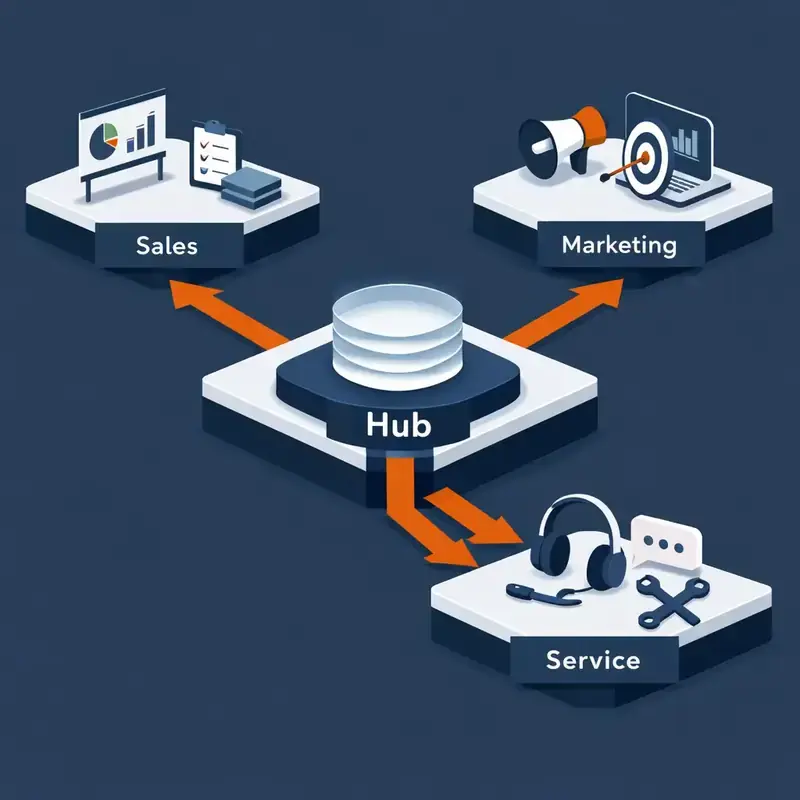
Enterprise onboarding in HubSpot is about more than setting up a CRM. It is about building a foundation for how sales, marketing and service will work together in your organization. PURASU helps B2B companies do exactly this, with clear roles, realistic timelines and a governance model that actually works.
In this article you get a concrete walkthrough of what an enterprise implementation requires. You will understand which roles are needed, how long the process takes and which governance decisions determine whether your HubSpot becomes a business-driving asset or just an expensive contact register.
HubSpot onboarding for enterprise in Sweden
- Enterprise onboarding requires clear roles where IT, marketing, sales and management all have defined responsibilities.
- A realistic timeline for a full enterprise implementation runs over 8-16 weeks depending on complexity.
- The governance model determines whether your data stays reliable, so decide early who owns what in the system.
- PURASU offers senior HubSpot expertise that helps you avoid the most common implementation mistakes.
- The right data model from the start reduces the need for expensive rework and ensures scalability over time.
What does enterprise onboarding in HubSpot involve?
Enterprise onboarding means configuring HubSpot so that it reflects how your business actually works. It is not about activating features, it is about building a data model, pipelines and lifecycle stages that match your revenue model.
For larger organizations this often includes several business units, different sales processes and integrations with ERP or other systems. Without the right structure from the start, HubSpot becomes a chaotic contact register rather than a tool for growth.
Which roles are needed for HubSpot enterprise onboarding?
A successful implementation requires that the right people are involved from the start. Here are the key roles you need to define:
Business project owner
This person makes decisions about processes and priorities. Often a marketing or sales manager who understands what the customer journey looks like and can translate business needs into system requirements.
Technical project manager
Responsible for integrations, data migration and technical configuration. This role ensures that HubSpot is connected to your existing systems in a scalable way.
End-user representatives
Representatives from sales, marketing and service who can test and validate that the system works in practice. Their input is crucial to make sure the system will actually be used.
Executive sponsor
A person from the management team who can make quick decisions and make sure the project has the right resources. This role is especially important when different departments have conflicting interests.
How long does an enterprise implementation of HubSpot take?
Expect 8-16 weeks for a full implementation. The timeline depends on how complex your organization is and how many integrations are required.
Weeks 1-2 focus on discovery: mapping current processes, data flows and the system landscape. The scope and success criteria of the project are also defined here.
Weeks 3-6 are about configuration: the data model, pipelines, properties and automations are built according to the structure defined during discovery.
Weeks 7-10 are the integration phase, where HubSpot is connected to ERP, marketing tools and other systems. Data is migrated and quality assured.
Weeks 11-16 involve training, testing and go-live. Users are trained, processes are tested and the system is rolled out gradually.
Why governance is decisive for your HubSpot success
Governance is about who decides what in HubSpot. Without clear rules, problems arise quickly: duplicates, inconsistent data and reports nobody trusts.
A study from Vantage Point shows that organizations with strong data governance see up to 40 percent better reporting accuracy. That is the difference between making decisions based on facts and guessing.
PURASU helps you define a governance model that includes data ownership, naming conventions, permission structures and processes for data maintenance. We make sure your HubSpot remains a reliable source of truth, not only at launch but over the long term.
Three governance decisions you must make early
The first decision is about data ownership: who is responsible for company data being correct? Often this is sales, but it must be stated explicitly.
The second decision concerns lifecycle definitions: what does an MQL mean in your organization? When does a lead become an opportunity? These definitions must be shared by marketing and sales.
The third decision concerns integration logic: when data is synced between systems, which system takes precedence in conflicts? This prevents data from being overwritten in unwanted ways.
Common mistakes in enterprise onboarding in Sweden
Swedish B2B companies often make the same mistakes when they implement HubSpot at enterprise level. Here are the most common ones:
Starting too small is a common problem. Many want to "just get started" and postpone important decisions until later. The result is a HubSpot that cannot scale and that requires expensive rework after only a year.
Overestimating your own ability is another mistake. HubSpot is easy to use, but configuring it correctly for a complex organization takes experience. What is done in ten different ways often has only one way that works in the long term.
Choosing a partner on price alone often leads to problems. A senior specialist who costs more per hour can often do the same job faster and better. The "cheap" choice often becomes more expensive in the long run.
How a HubSpot partner in Sweden can help you
An experienced HubSpot partner in Sweden contributes three things: knowledge of the platform, experience from similar implementations and an outside perspective on your organization.
PURASU is a HubSpot Gold Partner that works with senior consultants, not juniors learning on your budget. We have implemented HubSpot for enterprise clients across the Nordics and know which pitfalls to avoid.
Our focus is on the business, not just the technology. We help you build a HubSpot that drives revenue, not just collects contacts. That includes defining the right processes, setting up correct reports and making sure your team actually uses the system.
Data model, the foundation of a scalable HubSpot setup
Your data model determines how information is organized in HubSpot. Contacts, companies, deals and custom objects must relate to each other in a way that reflects your business.
A faulty data model creates duplicates, makes reporting harder and makes automations unreliable. PURASU helps you design a data model that can scale, whether you have 5,000 or 500,000 contacts.
According to our experience with Swedish enterprise clients, the right data model is the single most important factor for long-term success with HubSpot.
Summary: how to succeed with HubSpot enterprise onboarding
Successful enterprise onboarding in HubSpot requires three things: the right roles, enough time and a well-thought-out governance model. Without these components you risk building a system that nobody trusts or uses.
Invest time in the discovery phase. Define clearly who owns what. Choose a partner with experience from similar implementations. With these cornerstones in place, your HubSpot becomes a tool that drives business growth, not just another system to administer.
FAQs about HubSpot onboarding for enterprise in Sweden
How long does an enterprise HubSpot implementation take?
A full enterprise implementation usually takes 8-16 weeks. The time required depends on the number of integrations, the scope of data migration and the complexity of the organization.
PURASU helps you plan a realistic timeline tailored to your specific situation.
What does HubSpot onboarding for enterprise cost?
The cost varies depending on scope, but enterprise implementations often range from basic onboardings that match HubSpot's mandatory tier to more extensive projects that run for several months.
Contact PURASU for a tailored quote based on your needs.
Which HubSpot license do I need for enterprise?
The Enterprise tier of Sales Hub, Marketing Hub or Service Hub gives you access to advanced features such as custom objects, team hierarchies and extended reporting.
PURASU can help you decide which license tier fits your organization.
What is the difference between onboarding and implementation?
Onboarding is the process that helps you get started with HubSpot after purchase. Implementation is the broader process of configuring, integrating and adapting the platform for your organization.
For enterprise organizations these often overlap and require external expertise.
How do I choose the right HubSpot partner in Sweden?
Look for a partner with documented experience of enterprise implementations, senior consultants and a focus on business results rather than just technical configuration.
PURASU offers senior HubSpot expertise that delivers results from day one.