HubSpot data model and governance for enterprise in Sweden 2026
Swedish B2B companies that scale quickly often face the same challenge: their HubSpot data grows out of control. Duplicates appear, permissions become unclear, and the reports stop adding up. PURASU helps enterprise companies build data models and governance structures that last.
This article gives you a basic understanding of what a HubSpot data model is, why governance is essential for scalable growth, and how to build a structure in practice that supports both your sales and marketing teams.
Key takeaways: HubSpot data model and governance for enterprise
- A data model defines how contacts, companies and deals relate to each other in your HubSpot CRM.
- Governance is about rules for who may change data, how fields should be filled in, and who owns the process.
- Swedish enterprise companies need clear permissions to avoid chaos when several teams work in the same portal.
- PURASU supports you with a RevOps perspective and experience from Nordic B2B implementations of HubSpot.
- Scalable reporting requires a data model that is thought through from the start, not something you fix afterwards.
What is a HubSpot data model?
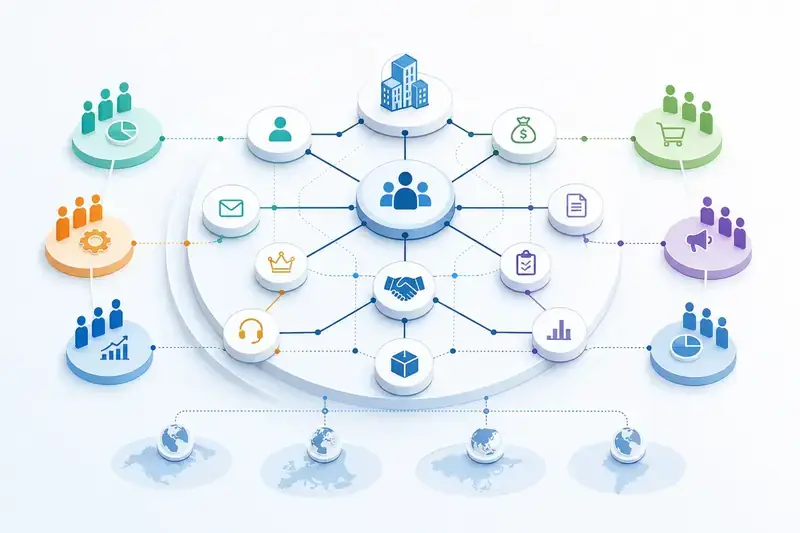
A data model is the structure that defines how your records connect in HubSpot. It describes the relationships between contacts, companies, deals and other objects. When you have a clear data model, everyone on the team knows where the information is and how it should be used.
Think of it as a blueprint for your CRM. Without a blueprint, every team builds its own structure. The result is that sales has its version of the truth, marketing has another, and customer service a third. When you then need a report that covers the whole customer journey, nothing adds up.
For enterprise companies with several business areas, countries or product lines, the data model becomes even more important. You need to be able to segment, filter and analyze data in a way that actually reflects the reality of your organization.
Why is governance essential for enterprise companies?
Governance is about rules and responsibility. Who may create new properties in HubSpot? Who decides how fields should be named? And who is responsible for making sure data is correct?
Without clear governance, chaos follows. One salesperson creates a field for "Deal Amount", another for "Deal Size", and a third for "Contract Value". They all mean the same thing, but now you have three fields that make reporting impossible. According to research from PortalPilot, 79% of CRM data entered by salespeople is lacking in quality or completeness.
For Swedish enterprise companies that grow internationally, this is especially critical. You need to be able to trust that data from Stockholm, Oslo and Copenhagen follows the same rules. Otherwise, comparisons between markets become meaningless.
How do you build a scalable data model in HubSpot?
Start with your business-critical processes. Which objects do you need to track the whole customer journey? For most B2B companies, that means contacts, companies, deals and perhaps products. Avoid creating custom objects if the standard objects are enough.
The next step is to define the relationships. How should a contact be linked to a company? Can a deal have several contact persons? These decisions affect everything from reporting to automations.
PURASU has seen that many enterprise companies make the mistake of building too complex a setup from the start. Begin simple and add complexity when you actually need it. A data model should grow with your business, not hold it back.
Practical steps to define your data model
Document your current objects and properties. Which fields do you use? Which have become obsolete? You can read more about how to clean up your HubSpot data in our earlier guide.
Identify your reporting needs. Which questions does management want to be able to answer? Then build the data model so that these reports become possible without manual calculations.
What permissions does an enterprise team need in HubSpot?
Permission management is a central part of governance. HubSpot offers flexible options for controlling who may view, edit and delete data. But the flexibility requires you to actively decide how it should be used.
For enterprise companies, we recommend starting with role-based permissions. A salesperson does not need to be able to change marketing settings. A marketing manager does not need to see individual salespeople's commissions. By limiting access, you reduce the risk of mistakes and keep the focus on the right tasks.
Think about ownership too. Every property and every process should have a clear owner. That person is responsible for making sure the field is used correctly and that data stays high quality.
How do you secure data quality over time?
Data quality is not a one-off project. It is an ongoing process that requires routines, automations and clear areas of responsibility. According to Smith Digital, poor data quality costs companies an average of $12.9 million per year.
HubSpot Operations Hub has features to format data automatically, find duplicates and validate fields. But the tool is not enough on its own. You also need to define which quality standards apply and who follows up on deviations.
PURASU recommends scheduling regular data audits. Once a quarter, you go through your most important fields and check that they are used as planned. It does not take long but saves an enormous amount of headaches later.
How do you connect governance to RevOps reporting?
RevOps, or Revenue Operations, is about aligning sales, marketing and customer service around shared goals. The foundation of working RevOps is reliable data. If your teams do not trust the reports, they will not use them.
A well-defined data model lets you track the whole customer journey in one and the same system. You see which marketing efforts lead to meetings, which meetings become deals, and which customers stay the longest. PURASU combines technical expertise with a RevOps perspective to make sure your HubSpot setup drives business results.
Without governance, RevOps reports become unreliable. If different teams define "Marketing Qualified Lead" in different ways, you cannot compare results. Standardize definitions early and document them clearly.
Conclusion: how to get started with a data model and governance
A well-thought-out data model and clear governance are the foundation for scalable growth in HubSpot. Start by documenting your current structures, identify gaps, and set up rules for how data should be handled going forward.
The most important thing is to see data quality as a business issue, not a technology issue. When management prioritizes governance, the whole organization gets the right signals. And when everyone works by the same rules, HubSpot becomes a tool that actually supports your decisions.
PURASU has experience from Nordic B2B implementations and can support you with everything from initial setup to ongoing optimization. We focus on building structures that your organization can own and develop itself.
Frequently asked questions about HubSpot data model and governance
What is included in a HubSpot data model for enterprise?
A data model for enterprise includes definitions of objects, properties, relationships and naming conventions. It describes how contacts, companies and deals connect.
PURASU helps you build a data model that matches your business logic and your reporting needs.
How do we set up governance in HubSpot?
Governance means defining roles, permissions and responsibilities. Decide who may create properties, who owns data processes, and how you validate quality.
PURASU gives you frameworks and templates to get started with clear governance from day one.
Why is data quality important for RevOps?
RevOps is built on sales, marketing and customer service sharing the same data foundation. Poor data quality makes reports unreliable and decisions get made on the wrong basis.
With PURASU, you get both technical implementation and strategic support to secure your data quality.
How often should we review our data model?
Review your data model quarterly or when larger changes happen in the business. New products, markets or teams may require adjustments to the structure.
Can we use HubSpot for enterprise without Operations Hub?
Yes, but Operations Hub gives you features for automatic data cleaning and advanced syncing that are valuable for larger organizations. PURASU can help you evaluate which license level fits your needs.