How to measure user adoption in your CRM
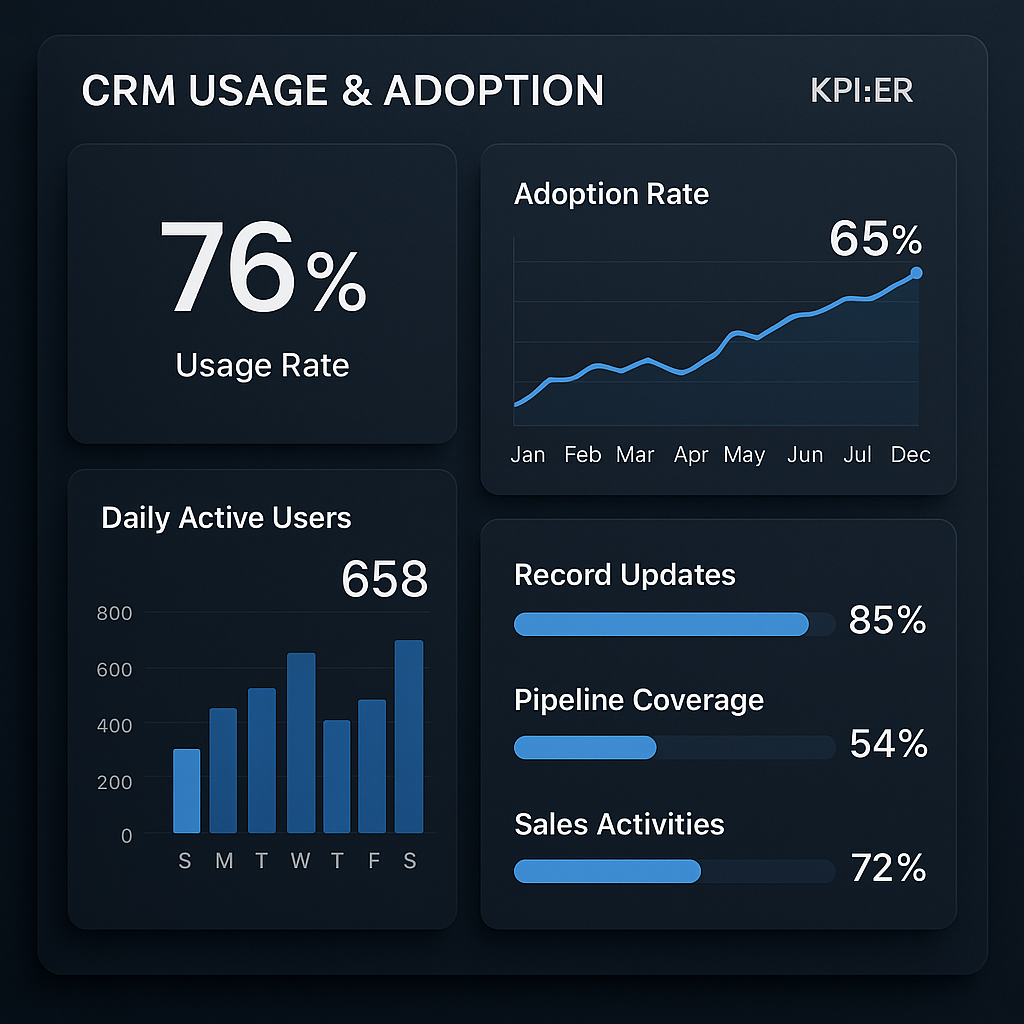
When only half of your sales team uses your CRM system, you lose valuable customer insight and revenue. Here is how to measure and improve user adoption to get everyone on board.
Why CRM adoption determines success in the financial sector
When only half of your sales team actively uses your CRM system, a dangerous situation arises: you lose valuable customer insight, business opportunities slip through your fingers and your decisions are made on incomplete data. In the financial sector, where every customer interaction can have a long-term impact on both revenue and relationships, the cost of poor CRM adoption becomes especially noticeable.
User adoption is not just about getting employees to log in to the system, it is about creating a culture where CRM becomes the obvious tool for driving business forward. When sales and marketing people work with fragmented data and manual processes, it becomes impossible to get a unified view of the customer journey or to deliver the personalized experience that today's B2B buyers expect.
Low CRM adoption also creates a chain reaction of problems: data quality deteriorates when some teams do not update information, reporting becomes unreliable, and marketing and sales work toward different goals. To achieve real CRM optimization and data-driven marketing, you need to start by understanding and measuring user adoption systematically.
Concrete metrics that show real user adoption
To improve user adoption, you first need to know where you stand. Looking at the number of logins is not enough, you need deeper metrics that show whether the CRM system is really being used to drive business results. Start by measuring login frequency per user and team, but move on to more meaningful metrics such as the number of activities created, deals updated and customer interactions documented.
An effective CRM strategy requires you to segment your metrics by user group. Sales managers may need to use reporting and dashboards daily, while sales reps should primarily log meetings and update deals. The marketing department should follow up on campaign interactions and qualify leads. By defining what 'good adoption' means for each role, you can identify concrete areas for development.
Also look at time-to-value metrics: how long does it take from a new employee getting access to the CRM until they use it actively and correctly? A long onboarding time can indicate that the system is perceived as complex or that the training is insufficient. Modern CRM platforms such as HubSpot offer built-in adoption reports that show exactly which features are used and by whom, giving you a clear picture of where to focus your efforts. If you are wondering how a well-structured implementation affects adoption, it may be worth reading about why HubSpot implementations often cost more than they should.
Data quality as an indicator of genuine system use
High user adoption means nothing if the data recorded in the CRM system is incorrect, incomplete or inconsistent. Data quality is therefore one of the best indicators of whether the team is really using the CRM the right way. When sales reps quickly click through required fields to 'tick off' system requirements without entering correct information, you have an adoption problem, not a technology problem.
Start measuring data completeness systematically: How many of your contacts have complete profile fields? How many deals are missing critical information such as expected deal size or decision date? Also analyze data consistency: are the right categories, pipelines and statuses used according to your defined CRM strategy? These metrics quickly reveal whether users understand the importance of good data and whether your processes support correct recording.
Making your CRM platform more efficient requires you to work actively with data hygiene. Implement validation rules that prevent incomplete data from being saved, create clear guidelines for how different fields should be used, and make sure your sales reps understand the link between good data quality and their own success. When the team sees that better data leads to smarter insights, automated processes and fewer manual tasks, the motivation to record information correctly from the start increases.
Automation and AI to increase both adoption and efficiency
One of the most common reasons for low CRM adoption is that the system is perceived as time-consuming and bureaucratic. When sales reps have to spend more time on administration than on selling, resistance to the CRM comes naturally. The solution lies in smart automation and AI that remove repetitive tasks and make the system an asset rather than a burden.
Modern CRM implementations use AI to automatically log email conversations, suggest the next best activity for each deal, and enrich contact data automatically. This means users get more value from the system with less manual work. When HubSpot automatically links email threads to the right deal, suggests optimal follow-up times based on historical patterns, and warns about deals at risk of stalling, the CRM becomes a tool that helps the sales rep succeed, not just one that tracks their activity. See how HubSpot workflows that are actually used in practice can reduce the administrative burden and increase adoption.
To succeed with CRM implementation and adoption through automation, you need to start by mapping which repetitive tasks take the most time from your users. Automate lead qualification with predictive lead scoring, create workflows that automatically assign and remind about follow-ups, and use AI-driven analysis and reporting in the CRM to give users insights without them having to build complex reports themselves. When the team experiences that the CRM saves time instead of stealing it, adoption increases naturally.
Continuous optimization delivers measurable business results
CRM optimization is not a one-off project, it is an ongoing process that requires regular follow-up, analysis and adjustment. The organizations that succeed best with their CRM platform are those that implement a culture of continuous improvement, where user feedback is taken seriously and the system is adapted to changing business needs.
Establish a regular review process where you analyze adoption metrics, data quality and business results together. Which features are not used at all? Are there bottlenecks in your processes that create frustration? Do you have workflows that are no longer relevant? By continuously clearing away complexity and focusing on the features that truly drive value, you keep the CRM system relevant and user-friendly. This is the core of effective CRM advisory: understanding that the technology must serve the business, not the other way around.
Also measure the actual business results of improved adoption. When more users actively work in the CRM with high data quality, you should see concrete improvements: shorter sales cycles through better pipeline visibility, higher conversion rates through data-driven marketing and lead nurturing, increased customer satisfaction through better coordination between teams, and improved forecast accuracy through complete data. These measurable results become both proof that your CRM strategy works and the motivation for the team to keep developing. When user adoption is tied directly to business success, a positive spiral is created that drives both the system and the organization forward.